


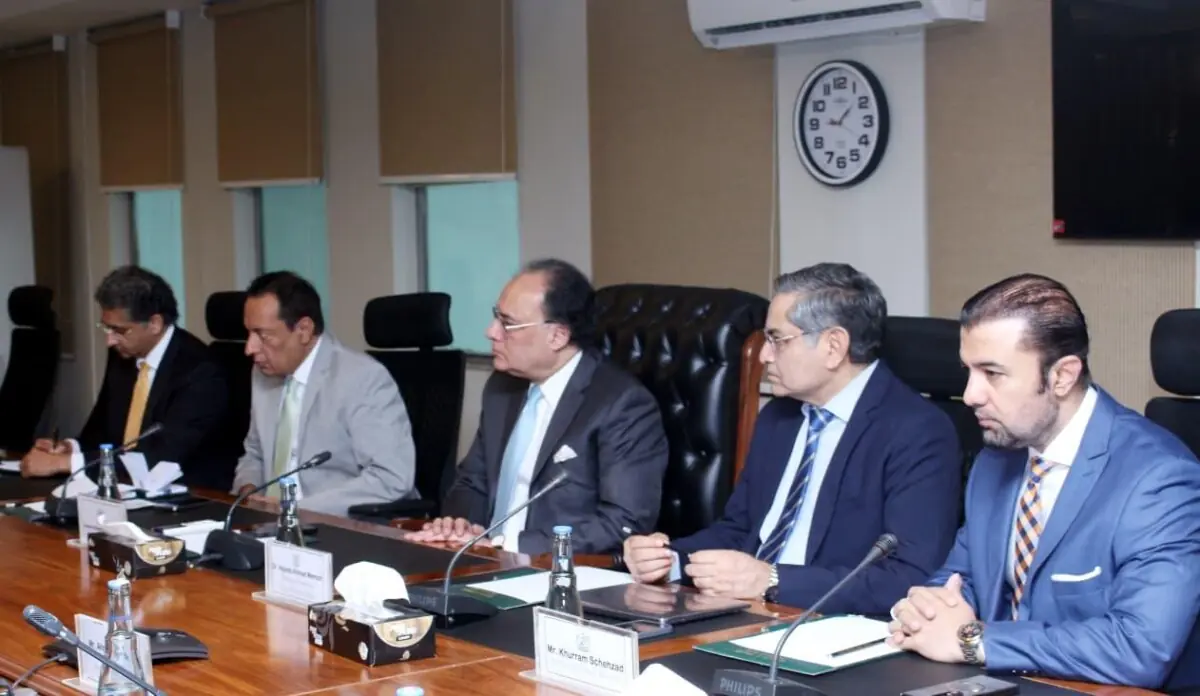
The Institute of Chartered Accountants of Pakistan (ICAP), the premier statutory regulatory body in Pakistan, presented key proposals for the upcoming national budget on Monday.
The development came during Finance Minister Muhammad Aurangzeb’s meeting with a delegation of the ICAP today at the Finance Division.
The delegation was led by Samiullah Siddiqui, President ICAP, and included Jehanzaib Amin, Vice President ICAP; Ahmed Raza Mir, Vice President ICAP; and Zeeshan Ijaz, Council Member ICAP and Chairman Economic Advisory Committee.
The ICAP delegation presented a range of proposals and recommendations relating to documentation, group taxation structures, export-oriented services, and harmonisation of tax treatment across sectors.
Discussions also focused on measures aimed at improving competitiveness, facilitating investment, strengthening the ease of doing business, and supporting effective revenue mobilisation alongside the broadening of the tax base.
Pakistan to issue first ‘Panda bond’ next week, finance minister says
Aurangzeb acknowledged the proposals and recommendations shared by the delegation and noted that these would be carefully reviewed as part of the ongoing budget formulation process.
He emphasised the importance of continued engagement with professional bodies and industry stakeholders to ensure that economic and taxation policies remain responsive, practical, and aligned with the country’s broader reform objectives.
The finance minister shared the government’s ongoing efforts to transform the tax administration system through reforms centred around people, processes, and technology.
He underscored the importance of institutional modernisation, process simplification, and enhanced automation to improve transparency, reduce unnecessary human intervention, and facilitate taxpayers.
In this context, he highlighted the operationalisation of the Tax Policy Office under the Finance Division as an important institutional reform aimed at strengthening policy formulation and improving coordination between tax policy and administration.
The meeting also covered the growing role of technology and digital systems in strengthening compliance, enforcement, and revenue administration.
Aurangzeb noted that AI-led production monitoring and technology-driven oversight mechanisms introduced across various sectors are helping improve documentation, strengthen compliance, and reduce leakages within the system.
He reiterated the government’s commitment to building a transparent, technology-driven, and facilitative tax system that supports economic growth, encourages documentation, and strengthens governance and institutional effectiveness.