


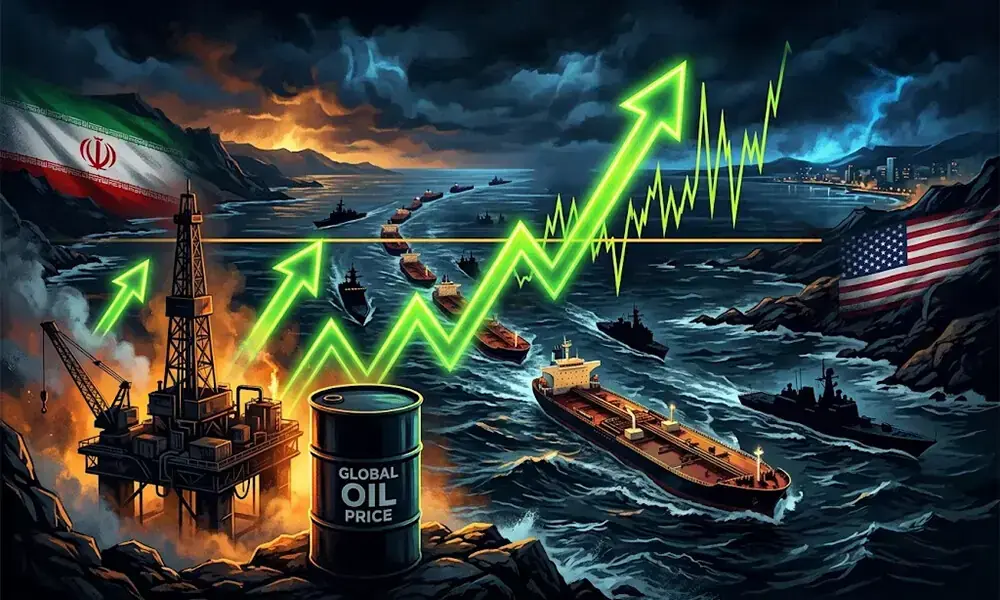
NEW YORK: Oil prices settled higher for the third consecutive session on Tuesday as stark differences between the US and Iran over a proposal to end the war in the Middle East raised concerns that supply disruptions upending the global oil market are likely to be prolonged.
Brent crude futures gained USD3.56, or 3.42 percent, to settle at USD107.77 a barrel, and US West Texas Intermediate futures closed up USD4.11, or 4.19 percent, at USD102.18. Both benchmarks had climbed nearly 3 percent on Monday.
US President Donald Trump said on Monday that ceasefire talks with Iran were on “life support,” pointing to disagreements over Tehran’s demands of a cessation of hostilities on all fronts, the removal of a US naval blockade, the resumption of Iranian oil sales and compensation for war damage.
Iran also emphasised its sovereignty over the Strait of Hormuz, through which about a fifth of global oil and liquefied natural gas normally flows.
“Markets are doubting that a peace deal is within reach,” StoneX analyst Alex Hodes said.
EIA: Strait may be closed to late May
The US Energy Information Administration on Tuesday said it now assumes the strait will be effectively closed through late May, leading to much larger losses of Middle Eastern oil and gas supplies than its prior forecasts. The agency had earlier expected the waterway would be shut through late April.
Even after flows resume through the Strait of Hormuz, it will take at least until late 2026 or early 2027 for oil output and trade patterns to return to pre-conflict levels, the EIA said.
Disruptions linked to the near-closure of the strait have prompted producers to curtail exports, with a Reuters survey on Monday showing OPEC oil output in April fell to its lowest level in more than two decades.
The EIA estimates 10.5 million barrels per day of output were lost during April across the Middle East due to the strait closure, limiting exports. Other sources have pegged the supply losses much higher. J.P. Hanson, global head of oil and gas at Houlihan Lokey, said the conflict has created a 14 million bpd supply gap.