


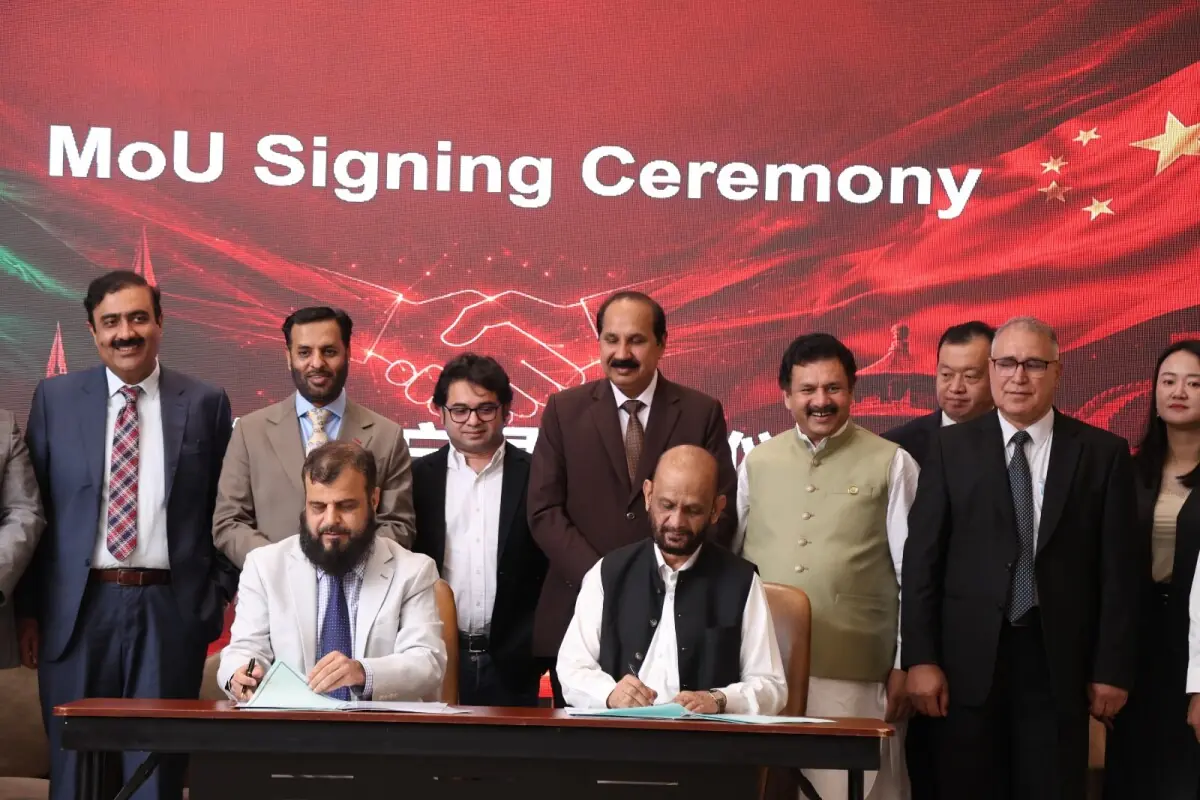
Pakistan’s pharmaceutical companies have signed 10 memorandums of understanding (MoUs) with Chinese firms, paving the way for the local manufacturing of raw materials for medicines (API/ active pharmaceutical ingredients).
The MoUs would help establish collaboration for vaccine production locally, transfer of technology, and attracting both foreign and domestic investment into the country.
Among major MoUs; Unichem Pharmaceuticals Pakistan and China’s Xinxu Group entered into a significant investment partnership valued at approximately Rs10 billion, under which technology transfer has formally commenced for local pharmaceutical manufacturing, according to a press statement issued by the Ministry of Commerce on Tuesday.
Also read: Pakistan approves national policy on vaccine production
The project will enable local production of critical pharmaceutical raw materials, including Omeprazole API, around 95% of which has historically been imported into Pakistan, significantly reducing import dependence, conserving foreign exchange, and improving domestic pharmaceutical supply resilience.
Another major agreement involved Lucky Core Group and Chinese pharmaceutical partners, further expanding industrial cooperation between the two countries.
Addressing at an event as chief guest in Islamabad, Federal Minister for National Health Services Syed Mustafa Kamal described the occasion as a historic milestone for Pakistan’s pharmaceutical industry and healthcare sector, particularly in terms of local production of pharmaceutical raw materials (APIs).
“This was a day Pakistan had waited for over many years. Self-reliance in healthcare can only be achieved through technology transfer and strategic industrial collaboration. The beginning of local API production in Pakistan would positively impact both medicine affordability and long-term supply security,” the health minister said.
The event also witnessed progress on poultry vaccine manufacturing in the country. “Pakistan currently imports poultry vaccines worth approximately $4.5 million,” the minister said.
Kamal further stated that Pakistan currently provides vaccines for 13 diseases free of cost to children, but global immunisation subsidised arrangements are expected to end by 2030, after which Pakistan will need to procure these vaccines through its own financial resources, requiring approximately $1.2 billion annually.
“The government is therefore working to ensure local vaccine manufacturing capacity before 2030 so that Pakistan can reduce strategic dependence on external supply chains,” he said.
Referring to the Covid pandemic, the minister said vaccines played a critical role in reducing mortality, adding that future advances, including vaccines for diseases such as cancer, might transform healthcare outcomes even further.
Also read: PTA takes action against digital content involving illegal therapeutic goods sale
The ceremony for inking MoUs was organised in collaboration with the Ministry of National Health Services, Regulations and Coordination (MNHSRC), Drug Regulatory Authority of Pakistan (DRAP), One Station China Desk (OSCD), and the office of Parliamentary Secretary for Commerce Dr. Zulfiqar Ali Bhatti.