


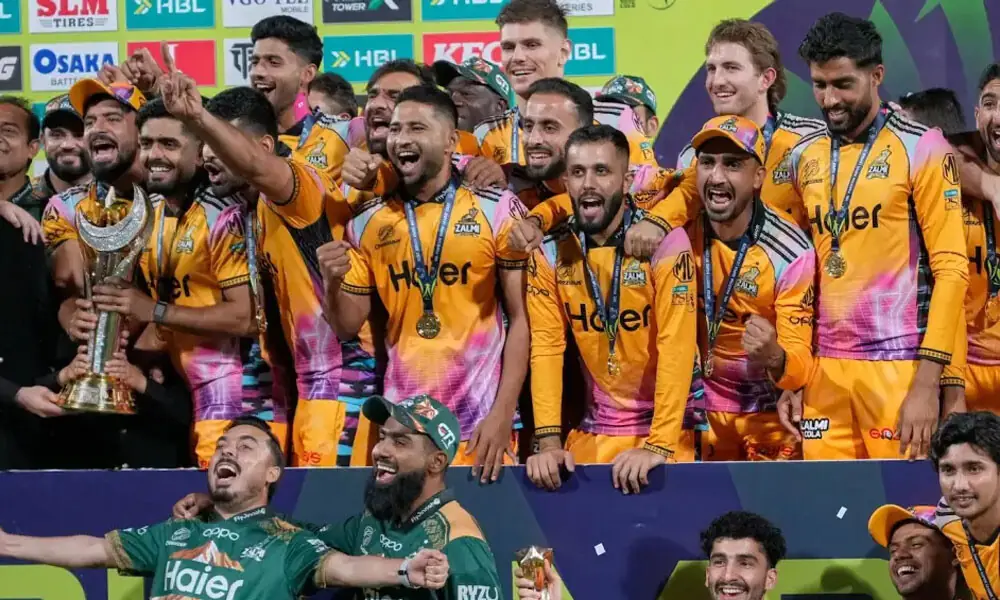
The Pakistan Super League (PSL) has steadily evolved into one of the most structurally significant media and marketing platforms in Pakistan’s entertainment economy. Its relevance no longer lies solely in cricketing competition, but in the way it aggregates audiences across television, digital platforms, and physical fan engagement spaces within a tightly compressed seasonal window.
Within this ecosystem, long-term brand partnerships such as the one between Ufone 5G and Peshawar Zalmi illustrate how commercial relationships around the league have shifted from traditional sponsorship visibility to more integrated, content-led participation.
Ufone’s association with Zalmi has extended across multiple PSL seasons and reflects a broader strategic approach that treats the league not just as an advertising opportunity, but as a sustained communication platform. Over time, the partnership has moved beyond static branding placements into campaign-led storytelling, product integration, and audience engagement initiatives that operate across broadcast and digital environments.
One of the more visible outcomes of this collaboration has been the development and amplification of the “Data Bohhaaat Hai” communication line. Rather than functioning as a conventional telecom message focused on technical product specifications, the campaign was positioned within the cultural language of cricket fandom and everyday digital usage. In doing so, it helped translate a functional offering—mobile data—into a more recognisable and conversational reference point within mainstream audiences.
A further layer of the partnership has been the use of player association to reinforce credibility and visibility. Prominent cricketers, including Babar Azam, have been featured in Ufone-led campaigns linked to Zalmi, aligning brand messaging with sporting performance narratives that already command significant public attention during the PSL season.
Beyond commercial messaging, the partnership has also incorporated social and inclusion-oriented initiatives. Through platforms such as “Dil se Ba-Ikhtiar,” Ufone and Zalmi have attempted to extend engagement beyond match-centric activity. This has included women’s participation in creative aspects of the league ecosystem, such as involvement in kit design, reflecting a gradual expansion of who participates in PSL-related cultural production.
The collaboration has further intersected with initiatives like the Zalmi Women League, which contributes to the broader visibility of women’s cricket in Pakistan. While still developing in scale, such efforts indicate how PSL-linked partnerships are increasingly being used to support secondary sporting and social narratives alongside the main tournament.
From a media systems perspective, however, the broader significance of the PSL lies in its unique ability to operate across three simultaneous audience layers. It remains one of the few properties capable of delivering nationwide broadcast reach, concentrated urban youth engagement, and real-time digital visibility within the same live cycle.
At the national level, the PSL continues to function as a shared viewing event, cutting across cities and regions through television distribution. This ensures mass accessibility, particularly in markets where live sporting content is otherwise limited to cricket. In parallel, urban audiences—especially younger demographics—engage with the league as a hybrid entertainment product, shaped by franchise identity, international player participation, and fast-paced match formats.
The third and increasingly dominant layer is digital. PSL matches generate continuous, real-time online engagement through short-form video content, commentary threads, meme culture, and reactive brand activity. This creates a parallel consumption environment in which the match is not only watched but also actively interpreted and redistributed across social platforms as it unfolds.
It is this simultaneity that gives the PSL its commercial and media value. Few other properties in Pakistan are able to compress attention in this way—where television audiences, in-stadium spectators, and digital participants are all reacting to the same moments in near real time. For brands, this creates a rare alignment between reach, immediacy, and cultural relevance.
The Ufone–Zalmi partnership has operated within this structure by increasingly shifting toward always-on content strategies. Rather than relying solely on pre-produced campaigns, much of the activation now takes place during live matches through reactive posts, short-form storytelling, and culturally aligned digital content. This approach reflects a broader change in sports marketing where responsiveness to match moments has become as important as planned messaging.
However, the speed and density of engagement also introduce a degree of volatility. Brand narratives are increasingly shaped by audience interpretation and online discourse, meaning that messaging must align closely with live sentiment to remain effective. In this environment, relevance is not guaranteed by visibility alone, but by timing and contextual fit.
Despite these complexities, the PSL continues to function as one of the most efficient attention-consolidation platforms in the country. It brings together disparate audience segments in a compressed timeframe and converts sporting moments into shared cultural reference points across media formats.
In that sense, partnerships such as Ufone 5G and Peshawar Zalmi are less about traditional sponsorship visibility and more about participation in a broader media system—one in which cricket acts as the organising framework for national attention, urban youth culture, and real-time digital interaction.