


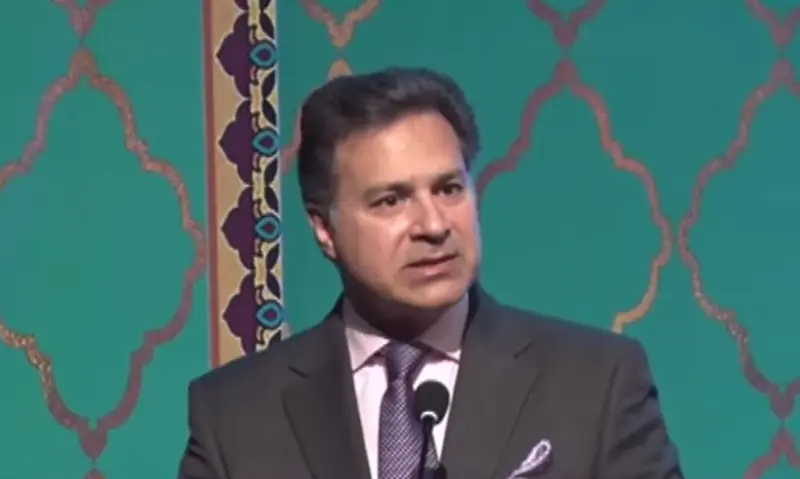
Justice Miangul Hassan Aurangzeb has called on the judiciary to encourage alternative dispute resolution (ADR) and detailed the Supreme Court’s ongoing efforts to establish a mediation centre.
In remarks aired on television on Monday, the SC judge stressed the need for mediators to be referred more cases, saying, “For that, the courts have to be willing to refer cases to mediation and must never think that by doing so, they are shying away from their primary responsibility of adjudication.”
He noted that, having already paid lawyers, parties were reluctant to pay a fee for mediators and, therefore, some mediation centres had a policy of pro-bono mediations.
“To encourage parties to go into mediation, what we have decided now is to train as many judges as mediators, and also officials in the high court and the Supreme Court who are law graduates, who will be willing to conduct mediation in their own pay scale,” the judge said.
Justice Aurangzeb, along with Lahore High Court’s Justice Jawad Hassan, was presenting a keynote address at the launch event in Islamabad of “ADR ODR International x ICDRL Peacemakers Community (AIPC)”, linked to the International Centre for Dispute Resolution Lahore (ICDRL).
Justice Aurangzeb also said that the SC was in the process of establishing a “court-annexed mediation centre”, with financial assistance from the United Nations Development Programme (UNDP).
He highlighted that the SC now had two accredited, trained mediators and that the law ministry was starting a programme on Monday to train more mediators.
“By the end of this year, I hope to take the number to at least a dozen, so that parties who cannot afford to pay for the mediators are referred to the mediation centre, which will be housed in the Supreme Court […] for mediation to be conducted free of cost,” the judge said.
He further noted, “When being responsible for choosing lawyers to be trained as mediators, I had to bear in mind that they had to represent the entire spectrum of law, ranging from banking law, service law, civil disputes, land disputes and so on and so forth.”
Justice Aurangzeb observed that there was no shortage of mediators in Pakistan, adding that they were “experts in different fields”.
“You cannot be expecting mediators to work pro bono,” he said, emphasising that mediation was a “very lucrative part of the profession”.
However, Justice Aurangzeb also warned against the “counterproductive effect” of referring cases to mediation, with mediation becoming a “time-consuming device”.
He contended, “The experiment of mandatory mediation can start off with a few laws.”
While asserting that mediations will be more common in Pakistan, Justice Aurangzeb said, “But we are at the nascent stage. Do remember: our journey started in 2022. In Turkiye, it started in 2013 and by 2022, they had three million cases decided through a process of mediation.”
He highlighted that the figure for Turkiye was now at a staggering 9m. “Alternative dispute resolution mechanisms have to be adopted to address this issue,” he asserted.
Speaking about the SC’s planned mediation centre, he recalled, “The chief justice was very reluctant to give me the best space in the SC for this purpose. The mediation centre has to be nice, it has to have a nice view. People have to come there and be comfortable.
“So I have taken the nicest view overlooking Constitution Avenue,” he added. The judge explained that this was inspired by his visit to Turkiye’s chamber of commerce, where he was told that the mediation room with a scenic view of the Bosphorus had more successful mediations than the one with a dull view.
SC’s former senior puisne judge Syed Mansoor Ali Shah has previously repeatedly called for adopting the ADR mechanism.
Days after taking oath in October 2024, Chief Justice of Pakistan (CJP) Yahya Afridi had nominated Justice Shah as the chairman of the SC’s three-member ADR Committee. This came as the court began taking steps in line with the Case Management Plan 2023 — a brainchild of Justice Shah — to address the growing backlog of cases.
In a first, the Islamabad High Court (IHC) in November 2023 formally inaugurated a mediation centre, aimed at reducing the backlog of cases in the IHC and the district courts.